
How to Layer for a Winter Himalayan Trek: Walk Light, Camp Warm
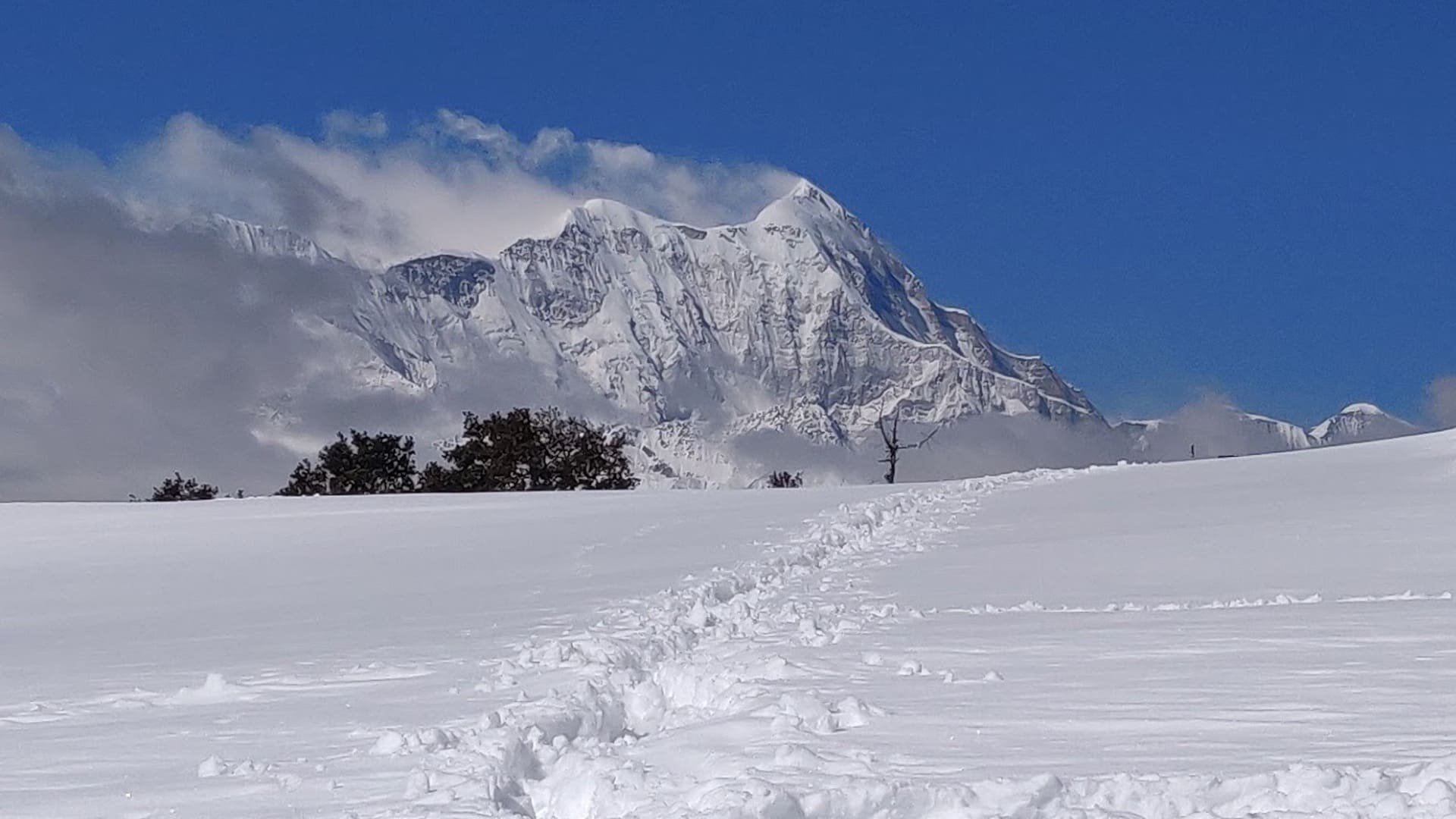
On a winter Himalayan trek you need two outfits from the same bag: a light one for walking and a full warm stack for camp. On Kuari Pass, which I finished on 3 December 2025, nights dropped to about -8°C. I was comfortable walking in just a fleece over a T-shirt, and at camp I needed every layer I had.
Quick list
- Walking: quick-dry full-sleeve T-shirt plus a fleece
- Camp: thermal top and bottom, then the T-shirt, fleece and an insulated jacket
- Head: a wool beanie
- Neck: a neck warmer for windy stretches
- Hands: gloves that still work below zero
- Two T-shirts and two trousers are enough for the whole trek
Walk light: what I wore on the trail
While walking I wore only a Quechua MH550 full-sleeve dry-fit T-shirt with a Quechua MH100 fleece on top. Climbing keeps you warm, and that was enough every day. I didn't need the puffer or thermals on the move.
I carried two of those T-shirts and two pairs of Forclaz MT100 zip-off quick-dry trousers. Quick-dry fabric meant I never needed more spares than that.
Camp warm: the full stack once you stop
The campsites were a different story. Once we stopped, the temperature fell fast, and it got cold enough that icy water dripped on our tents at night.
This is how I layered at camp, from the skin out:
- Wedze BL100 thermal top and thermal bottom
- The quick-dry T-shirt
- The MH100 fleece
- The Forclaz MT100 puffer jacket, rated -5°C
Plus a Wedze Torsade 900 wool beanie, a Wedze Hug 500 neck warmer and my gloves.
The jacket's rating is worth a closer look. It's rated -5°C, and the nights went to about -8°C. On its own it would not have been enough. It worked because the thermals, T-shirt and fleece were underneath. When you compare jacket ratings, think of them as part of the stack, not the whole answer.
The small layers matter more than you think
The neck warmer was the item I was most grateful for on the whole trek, especially on the windy stretches of the trail. It's light, it packs into nothing, and it made a real difference.
The gloves were my weak spot. My Forclaz Trek 500 stretchable gloves were fine on cold mornings, but once the temperature went below zero at night they didn't keep my hands warm enough.
What I'd do differently
- Warmer gloves. This is my first upgrade: a pair made for sub-zero temperatures, for camp.
- Prepare for harsher weather. Sub-zero nights with icy drips on the tent are colder than they sound on paper.
- Pack a bit lighter. With layers that work together you need fewer pieces than you think. I carried more than I needed.
How to pack your layers
I packed the bag in layers too. Day items went at the top and in the quick-access pockets. Camp-only layers, the thermals and the puffer, went in the middle and bottom, because I didn't need them until we stopped. Keep heavy items close to your back so the bag doesn't swing.
Amazon.in options for each layer
I haven't used any of the products below; everything I wore was Decathlon. These are options on Amazon.in for each role in my layering system, picked on their makers' specifications. Each one is marked as not used by me in the list below the article.
- Insulated jacket: the TRIPOLE Winter and Snow Jacket is rated comfortable to -5°C, the same rating as my puffer, so plan to wear it over a fleece and thermals.
- Fleece: the Tripole Anti-Pilling Fleece Jacket fills the walking-layer role my MH100 fleece did.
- Thermals: the Tripole Fleece Warmer Upper and Lower are a micro-fleece top and bottom meant for nights at camp.
- T-shirt: the Tripole Full Sleeve Hiking T-Shirt is a full-sleeve trekking tee with a half zip.
- Gloves: the GOKYO K2 Extreme Cold Weather Gloves are rated to -10°C. This is the kind of upgrade I'd make after my gloves failed below zero.
Products mentioned on this page
TRIPOLE Winter and Snow Jacket, Minus 5 Degree Comfort
I have not used this one. Picked on its specifications.
A packable insulated jacket rated comfortable to -5°C, the role my Forclaz MT100 puffer (also rated -5°C) played at camp. On Kuari Pass nights reached about -8°C, so like mine it needs the fleece and thermals under it.
Tripole Anti-Pilling Fleece Jacket
I have not used this one. Picked on its specifications.
A polyester fleece jacket for walking in the cold, the job my Quechua MH100 fleece did: on Kuari Pass a fleece over a quick-dry T-shirt was all I needed on the move. Tripole lists it at 400 g.
Tripole Fleece Warmer Upper
I have not used this one. Picked on its specifications.
A micro-fleece thermal top for nights at camp, the job my Wedze BL100 thermal top did under every other layer. Tripole designs it as night-wear and a layer under a jacket.
Tripole Fleece Warmer Lower
I have not used this one. Picked on its specifications.
The matching micro-fleece thermal bottom, the job my Wedze BL100 thermal bottom did at night. Elasticated waist, made for sleeping and layering in the cold.
Tripole Full Sleeve Hiking T-Shirt
I have not used this one. Picked on its specifications.
A full-sleeve polyester-Lycra trekking T-shirt with a half zip for ventilation, the role my two Quechua MH550 tees played under the fleece. Tripole lists it at 200 g.
GOKYO K2 Extreme Cold Weather Gloves (up to -10°C)
I have not used this one. Picked on its specifications.
Insulated, windproof gloves rated to -10°C. My Forclaz Trek 500 gloves were not warm enough once nights went below zero, so this is the kind of upgrade I would carry next time.